|
|
|
Today’s High Tech Scene in
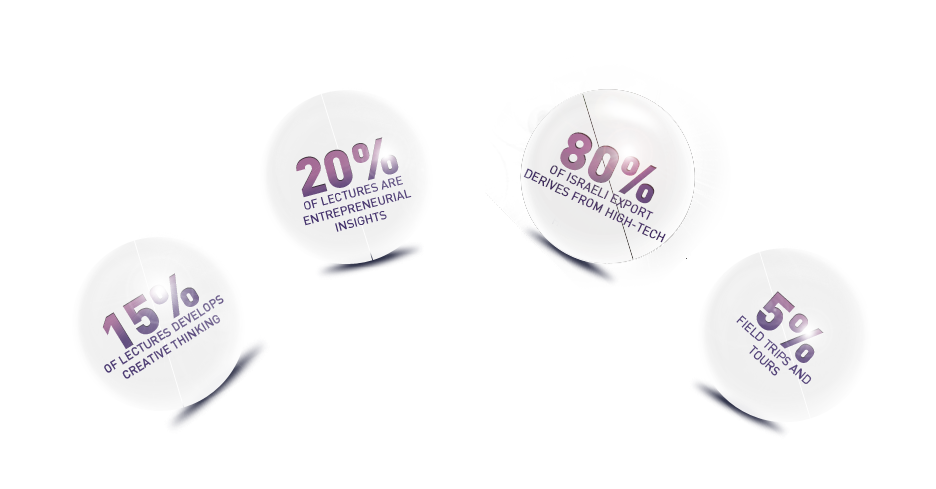
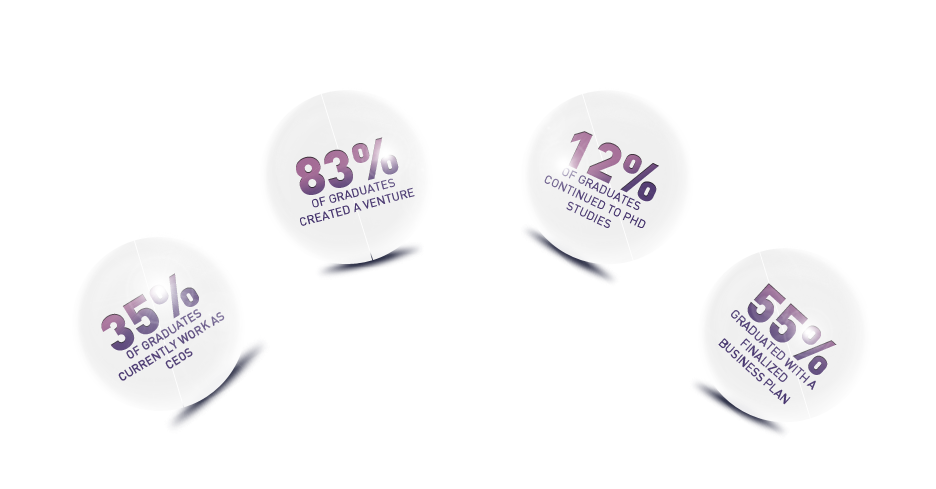
Approximately 1,000 companies get added to this community each year, causing Israeli start-ups also excel in the development of niche markets products, including OEM products and products that complete the lines being offered by industry giants. Ranging in size from one lone entrepreneur with only his guts and vision, to firms employing hundreds of highly skilled technical personnel, these crucibles of energy, determination, and innovation have sprung up like mushrooms across the country, utilizing the multi-faceted talents and original thinking of a multi-national population. Some of the best known examples of Israeli success stories, in addition to ICQ, include Checkpoint, Memco, and New Dimension. Historical necessity has forced this tiny country, with a total area of 8400 sq. miles and a total population of 6.5 million, to become a technological powerhouse. Surrounded by enemies on all sides, suffering embargoes by major suppliers, De-mobbed soldiers who served in elite technology units, together with Russian immigrants who arrived in Israel with their scientific and technological know-how, have burst onto the scene, offering a steady stream of new ideas and the energy required to actualize them. Whereas in 1960, seventy percent of Israeli exports were oranges and other agricultural goods, in 1997, high-tech products composed two-thirds of The Israeli Government, despite some justified complaints regarding its over-involvement, has been a major contributor to the success of The Office of the Chief Scientist was created in the early 70’s to encourage R&D-based export-oriented industries. The Chief Scientist’s emphasis was originally centered on technological innovation. However, an important transformation occurred in the early 80’s, shifting the emphasis to product marketability. In answer to the influx of technologically trained Russian immigrants, a technology incubator program was developed, under the aegis of the Chief Scientist. These immigrants had come with exciting ideas (which they were unable to develop in The goal of the incubators was to employ these immigrants, while turning technological concepts into commercial successes through a framework of support and financial aid. Once accepted into this scheme, entrepreneurs are expected to complete development of their products within 2 years and to locate required financing, in order to continue development of their companies. Their obligation to return government loans is based on their future success. The Israel Export Institute currently works with approximately 1000 high tech start-ups, offering seminars and workshops on every relevant topic, focusing especially on marketing and management. The Institute also initiates contacts with foreign investors and potential JV partners, and rents space in relevant worldwide exhibitions, encouraging and assisting start-ups to participate. According to Eyal Meshulam, Marketing Division/ Start-Up Companies, "The Israeli High Tech scene is a well-spring of ideas, innovation, brains, and technology. For investors, the ideal combination is Israeli R&D, innovation and improvisation, together with US-style management and marketing." The BIRD Foundation, the Israel/US Bi-national Industrial Research & Development Foundation, administered by the Chief Scientist in conjunction with the Criteria have gradually shifted from emphasis on product marketability to emphasis on quality of management and the CEO’s vision and strategy. Additional bi-national R&D foundations have been established with Enrollment in Business Schools is booming. Among the ten institutions offering MBA programs are: the ISEMI was established as an alternative to standard MBA programs whose curricula generally emphasize the theoretical at the expense of real-world implementation. Through a hands-on approach, which is coupled with a rigorous academic program, ISEMI’s lecturers guide students through situations they will actually face as entrepreneurs of technology start-ups. The Israeli government can be credited with creating the underpinnings for the VC community in Within six years, after an impressive record of success, the government sold its stake (at a substantial profit), leaving Yozma to become the basis for the more than 150 VC funds currently operating in During the last two years, an astounding $2.7 billion was under management. Israeli VCs that have teamed with US co-investors have benefited from the opportunity to springboard their start-ups into the vast The success of One industry expert anticipates a consolidation in the industry, leading, ultimately, to a smaller investment community which will be made up of the strongest and most stable VCs. Included among them are: Polaris Fund II ($125m); Gemini Israel II ($110m); Genesis Partners ($90m); and Kardon Technology Ventures ($75m). The Israeli VC community has traditionally shied away from seed-money investments, preferring more risk-free ventures. According to Micky Bronfeld, a successful investment banker, VCs have typically built safe portfolios and have taken key positions on the Boards of the companies in which they invest. In this way, VCs control a great deal of what is happening in Exciting new transactions are being announced almost daily, many of them involving the purchase (or partnering) of Israeli start-ups by industry giants. According to Amir Gilboa, manager of a consulting firm focusing on the high-tech industry, "Israeli start-ups tend to adopt an M&A exit strategy, due both to their great distance from major markets and to their lack of appropriate resources. This strategy usually creates lower value than the potential value that would have been achieved had the company adopted an IPO exit strategy. They also tend to focus on well-defined areas, having understood that a clear focus is the key to a successful venture. However, this tendency may change in the near future, as more resources become available and more management experience is gained. Though many foreign VCs have either set up offices in Israel or have joined Israeli VC firms, US companies have been, for the most part, slower to invest in Israel than their European and Japanese counterparts. It is generally accepted that this reluctance is due in part to geographical distance. Typically, if US investors can’t get to a board meeting within an hour, they prefer not to invest. Despite this hesitance, over 200 In examining The benefits of investing in Not less important is a labor pool offering the world’s highest proportion of scientists and engineers plus a growing cadre of experienced high tech managers with impressive histories of start-up successes. Uniquely positioned to enjoy the benefits of Free Trade Agreements with the In order to attract the investment community, Israeli entrepreneurs must dedicate themselves, not only to their ventures, but to advanced training and increased awareness of the industry and environment within which they operate. |

Articles