




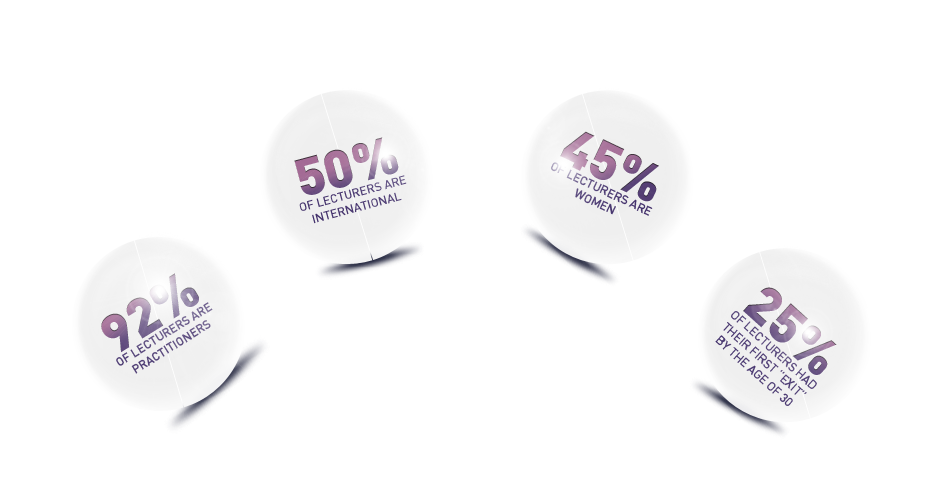
Our background
ISEMI was founded in 1996 by an international team of academics and entrepreneurs to enhance the offering of world-class, hands-on Entrepreneurship Education programs worldwide.
ISEMI is active in Europe, Asia and the Americas, with the aim of becoming a world-leading Entrepreneurship Education institution.
In 2012 ISEMI has won a tender, as a part of the European consortium, to train entrepreneurship educators in Europe. This activity has kept us busy both in Western as well as in Eastern Europe between 2012-2016.
testimonials
-


 Although already a PhD, the studies at ISEMI completed wonderfully the work I was doing as head of "Ramot" the commercialization arm of Tel Aviv University.
 -

 I strongly recommend to anyone who has an Idea, to participate in these courses, and would even go as far as titling this course as a "must" for any young entrepreneur.
 -

 This is a must course for any entrepreneur, no matter how far along his project is, who seeks to succeed in the field, whilst networking with other entrepreneurs.
 -

 The counseling that was offered to me and my colleagues by various lawyers, accountants, investors and entrepreneurs was most helpful.
 -
 I would certainly recommend this course for anyone who wishes to enter the field of entrepreneurship, especially with a high-tech focus.
 -

 I felt that all of ISEMI's teaching and support staff, together with their professional partners, are teaching with great love and have a profound understanding of their work.
 -

 ISEMI College is of very high teaching quality. It is very focused, conducted by true professionals, who were of much personal assistance to me and to my co-students.
 -

 Sunday's Global #FiresideChat was truely exceptional and the insights briliant!